
Table of Contents
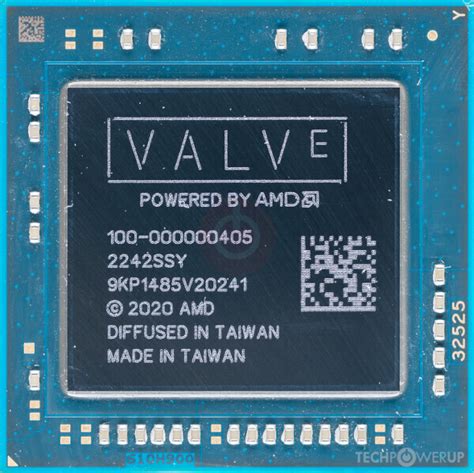
EXTERIORVIBE.BIZ.ID – The Valve Steam Deck revolutionized handheld PC gaming by offering a powerful, portable experience. At its core lies a bespoke processing unit, often referred to simply as the Steam Deck CPU, which is actually a highly integrated custom Accelerated Processing Unit (APU) designed by AMD.
This specialized chip is crucial for delivering the performance and efficiency needed to run a vast library of PC games on a compact, battery-powered device. Understanding its architecture is key to appreciating the Steam Deck’s capabilities and its impact on modern portable gaming.
The Heart of the Deck: AMD’s Custom APU
Valve partnered with AMD to create a unique system-on-a-chip (SoC) specifically for the Steam Deck. This unit, codenamed “Aerith,” is an APU, meaning it combines both the central processing unit (CPU) and graphics processing unit (GPU) onto a single die. This integration is vital for the device’s small form factor and efficient power management.
The APU leverages AMD’s proven Zen 2 CPU architecture and RDNA 2 GPU architecture, bringing desktop-class performance metrics into a handheld device. It’s a carefully balanced design to maximize performance while adhering to thermal and power constraints.
Zen 2: The CPU Architecture
The CPU portion of the Steam Deck’s APU features a 4-core, 8-thread AMD Zen 2 processor. These cores operate at a variable clock speed ranging from 2.4 to 3.5 GHz, dynamically adjusting based on the game’s demands and thermal conditions.
Zen 2 is renowned for its efficiency and strong multi-threading capabilities, enabling the Steam Deck to handle demanding game logic, physics, and background processes smoothly. This foundation ensures a responsive operating system and robust gaming performance even with numerous applications running.
RDNA 2: The Integrated Graphics Powerhouse
Complementing the Zen 2 CPU is the RDNA 2 GPU, featuring 8 compute units. This graphics processor clocks between 1.0 and 1.6 GHz, providing a substantial graphics punch for a handheld system.
RDNA 2 is the same architecture found in modern consoles like the PlayStation 5 and Xbox Series X/S, enabling the Steam Deck to render complex 3D environments and support features like hardware-accelerated ray tracing, although the latter is often too demanding for the device at native resolution.
Performance & Power Efficiency
The custom Steam Deck APU is engineered to deliver a maximum of 1.6 teraflops (FP32) of GPU performance and up to 448 GFLOPs (FP32) for the CPU. This level of power allows the Steam Deck to comfortably run most modern AAA games at its native 1280×800 resolution at playable frame rates, typically between 30 and 60 FPS.
Crucially, the APU operates within a configurable Thermal Design Power (TDP) range of 4 to 15 watts. This flexibility allows the system to balance performance with battery life, providing longer playtimes for less demanding titles and full power for graphically intensive experiences when plugged in or with reduced battery expectation.
Impact on the Gaming Experience
The integrated nature and optimized design of the Steam Deck’s CPU and GPU are what define its gaming experience. It eliminates the bottleneck often seen in systems where a weak CPU or GPU holds back the other component, ensuring fluid data flow and efficient processing.
This cohesive design ensures that games are not just playable but enjoyable on a handheld, setting a new benchmark for portable PC gaming. The custom AMD APU makes the Steam Deck a true portable powerhouse, capable of delivering a compelling gaming experience in the palm of your hand.
Frequently Asked Questions (FAQ)
What kind of CPU does the Steam Deck have?
The Steam Deck features a custom AMD Accelerated Processing Unit (APU) named ‘Aerith.’ It integrates both the CPU and GPU onto a single chip, utilizing AMD’s Zen 2 architecture for the CPU and RDNA 2 architecture for the GPU.
How many cores does the Steam Deck CPU have?
The CPU portion of the Steam Deck’s APU is a 4-core, 8-thread processor. This configuration allows it to efficiently handle multiple tasks and demanding game processes simultaneously.
What are the clock speeds of the Steam Deck CPU?
The CPU clock speed ranges dynamically from 2.4 GHz up to 3.5 GHz. This adaptive frequency helps balance performance with power efficiency based on the current workload.
Does the Steam Deck have a dedicated graphics card?
No, the Steam Deck does not have a separate, dedicated graphics card. Instead, it uses an integrated GPU based on AMD’s RDNA 2 architecture, which is part of the custom APU. This integrated solution is highly efficient for a handheld device.
Can the Steam Deck CPU be upgraded?
No, the Steam Deck’s APU (which includes the CPU and GPU) is soldered directly onto the motherboard. It is not designed to be user-upgradable, typical for most compact electronic devices to maintain form factor and thermal integrity.
Written by: James Wilson
