
Table of Contents
EXTERIORVIBE.BIZ.ID – The landscape of portable gaming has been significantly transformed by the emergence of powerful handheld PCs. Valve’s Steam Deck pioneered this modern era, offering PC gaming on the go.
Following its success, other manufacturers, notably ASUS, have entered the fray with their own compelling devices, leading to keen interest in alternatives to the Steam Deck, such as the ASUS ROG Ally.
ASUS ROG Ally: A New Contender Emerges
The ASUS ROG Ally stands as a direct competitor, offering a premium handheld gaming experience. It boasts impressive specifications, often surpassing the original Steam Deck in raw processing power.
Equipped with AMD’s Z1 Extreme processor and running Windows 11, the Ally provides broad compatibility with various game launchers beyond just Steam, including Xbox Game Pass and Epic Games Store.
The Valve Steam Deck: A Pioneer’s Strengths
Valve’s Steam Deck, on the other hand, established the benchmark for modern handheld gaming PCs. It delivers a streamlined experience primarily focused on the Steam ecosystem through its Linux-based SteamOS.
Known for its excellent ergonomics, robust software integration, and a more accessible price point, the Steam Deck remains a popular choice for many gamers.
Key Differences: Performance, OS, and Display
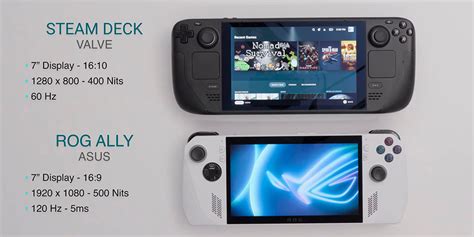
When comparing the ASUS ROG Ally and the Steam Deck, performance is a major differentiator; the Ally generally offers higher frame rates in many demanding titles thanks to its newer APU. However, the Steam Deck often benefits from deeper optimization within SteamOS for its specific hardware.
The operating system choice is also crucial, with Windows 11 on the Ally providing unparalleled flexibility for applications and games, while SteamOS offers a console-like, plug-and-play experience. Furthermore, the Ally features a 120Hz display compared to the Steam Deck’s 60Hz screen, offering a smoother visual experience.
Ergonomics, Storage, and Price Considerations
Both devices offer comfortable designs, though user preference often dictates which one feels better in hand. The Steam Deck is notably wider and heavier, providing a substantial feel, while the Ally is slightly lighter and more compact.
Storage options vary, with both offering expandable storage via microSD cards, though the Ally typically starts with a faster SSD. Pricing also plays a significant role, as the ASUS ROG Ally generally carries a higher price tag than most Steam Deck models, reflecting its more powerful hardware and premium features.
Who Should Choose Which Handheld?
Ultimately, the choice between the ASUS ROG Ally and the Steam Deck depends on individual priorities and gaming habits. The ROG Ally is ideal for users seeking maximum performance, Windows compatibility for diverse game libraries, and a high refresh rate screen.
Conversely, the Steam Deck is perfect for budget-conscious gamers deeply invested in the Steam ecosystem, who prioritize a cohesive user experience and excellent value.
Written by: Sarah Davis
