
Table of Contents
EXTERIORVIBE.BIZ.ID – The world of portable gaming has evolved dramatically, bringing powerful handheld PCs capable of running AAA titles on the go. Two prominent contenders in this arena are the Valve Steam Deck and the ASUS ROG Ally, each offering a distinct experience for enthusiasts.
Choosing between the Steam Deck or ROG Ally can be challenging, as both devices promise high-fidelity gaming in a compact form factor. This comprehensive comparison will break down their key differences to help you decide which one best suits your gaming needs.
Performance: Raw Power vs. Optimized Efficiency
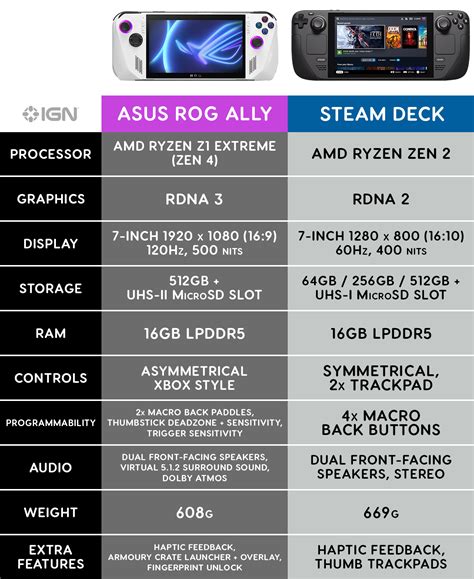
The ASUS ROG Ally generally boasts superior raw processing power, featuring AMD’s Ryzen Z1 Extreme processor, which often translates to higher frame rates in demanding games. This allows it to push more pixels and maintain smoother gameplay, especially at higher settings. The Steam Deck, powered by a custom AMD Aerith APU, is designed for optimized performance within its SteamOS environment, ensuring a consistent and enjoyable experience across its curated game library.
Display and Ergonomics: Visuals and Comfort
The ROG Ally features a sharper 7-inch 1080p display with a 120Hz refresh rate, offering a noticeably smoother and more vibrant visual experience. In contrast, the Steam Deck comes with a 7-inch 720p (or 800p for the OLED model) display, typically refreshing at 60Hz. When it comes to ergonomics, the Steam Deck is widely praised for its comfortable grip and unique trackpads, while the ROG Ally is lighter and feels more akin to a traditional console controller.
Operating System and Game Library: Windows vs. SteamOS
One of the biggest differentiators is the operating system: the ROG Ally runs Windows 11, granting access to virtually any PC game launcher (Steam, Epic Games, Xbox Game Pass) and a broader range of software. This offers unparalleled flexibility but can sometimes be less optimized for a handheld interface. The Steam Deck runs SteamOS (a Linux-based OS), which is highly optimized for handheld gaming and the Steam library, providing a seamless, console-like experience with excellent compatibility for verified titles.
Battery Life and Portability: Gaming on the Go
Battery life for both devices varies significantly depending on the game and settings, but generally, the Steam Deck often offers slightly better endurance for less demanding titles due to its lower-resolution screen and optimized OS. The ROG Ally’s higher performance and display demands can lead to shorter battery life during intense gaming sessions. Both devices are designed for portability, though the Ally’s lighter weight might give it a slight edge for extended carrying.
Price, Value, and Conclusion: Your Ultimate Choice
The Steam Deck typically offers a more accessible starting price point, especially for its base models, making it an excellent value for those primarily invested in the Steam ecosystem. The ROG Ally, with its premium performance and Windows flexibility, usually comes at a higher cost. Ultimately, if you prioritize raw power, a sharper display, and broad PC compatibility, the ROG Ally is a strong contender. However, if you seek a refined, plug-and-play experience, superior ergonomics, and excellent value for your Steam library, the Steam Deck remains an outstanding choice.
Written by: David Thomas
