
Table of Contents
EXTERIORVIBE.BIZ.ID – The Steam Deck has fundamentally reshaped our expectations for portable PC gaming, allowing a vast library of desktop titles to be played on the go. This revolutionary handheld’s capabilities are primarily driven by its highly customized processor, a marvel of engineering designed specifically for its unique form factor.
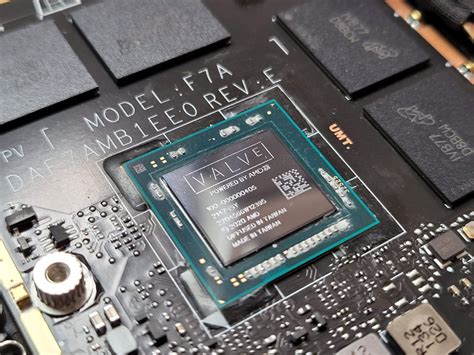
At the core of the Steam Deck’s performance lies a bespoke Accelerated Processing Unit (APU), developed in close collaboration with AMD. This single, integrated chip efficiently combines both the central processing unit (CPU) and the graphics processing unit (GPU), optimizing both space and power consumption.
The Heart of the Handheld: Valve’s Custom APU
The CPU component of this custom chip is built upon AMD’s Zen 2 architecture, featuring four cores and eight threads. This configuration provides ample processing power, adept at handling complex game logic, intricate physics simulations, and the demands of the underlying operating system.
For graphical heavy lifting, the Steam Deck utilizes AMD’s powerful RDNA 2 architecture, incorporating eight compute units. This integrated GPU is robust enough to render even demanding PC games smoothly at the device’s native 1280×800 resolution.
A critical innovation in the processor’s design is its unified memory architecture. The CPU and GPU seamlessly share a single, high-bandwidth pool of LPDDR5 RAM, which significantly reduces latency and accelerates data transfer rates between components.
Balancing Power and Portability
This processor was meticulously designed to strike a delicate balance between raw power and efficient operation, essential for a handheld device. It expertly targets excellent performance at lower resolutions and refresh rates, ensuring a consistent and fluid gaming experience without excessive battery drain.
The custom APU is engineered to consistently deliver a solid 30-60 frames per second experience across a wide array of modern titles. While it doesn’t aim to compete with high-end desktop PCs, it undeniably provides a remarkably enjoyable and stable portable gaming performance.
Beyond sheer processing capability, energy efficiency was a paramount consideration for extending gameplay sessions. The processor operates within a very conservative Thermal Design Power (TDP) envelope, which dramatically contributes to longer battery life during intensive gaming.
The inherent efficiency of the processor also significantly aids in managing thermals within the compact chassis. This thoughtful design allows the Steam Deck to sustain its performance levels for extended periods without experiencing severe thermal throttling, ensuring consistent gameplay.
Evolution and Impact
The newer Steam Deck OLED model features an updated iteration of this custom APU, internally known as “Aerith.” This revision, while still based on the Zen 2 CPU and RDNA 2 GPU architectures, benefits from improved manufacturing processes, leading to enhanced efficiency, cooler operation, and slightly boosted clock speeds.
The success of the Steam Deck’s processor has had a profound impact on the portable gaming market. It unequivocally demonstrated that powerful, desktop-class PC gaming is achievable in a handheld form factor, inspiring other manufacturers to explore similar integrated architectures in their own portable devices.
Conclusion: Engineering for Portable Excellence
Ultimately, the Steam Deck’s custom AMD processor stands as a testament to intelligent engineering and focused design. It masterfully balances CPU, GPU, and memory performance with critical power efficiency, serving as the foundational bedrock for an exceptional portable PC gaming experience.
Frequently Asked Questions (FAQ)
What kind of processor is in the Steam Deck?
The Steam Deck features a custom AMD Accelerated Processing Unit (APU), codenamed “Van Gogh” for the LCD model and “Aerith” for the OLED model. This chip combines a CPU and GPU into a single integrated unit specifically optimized for handheld gaming.
What are the specifications of the Steam Deck’s CPU and GPU?
The CPU component uses AMD’s Zen 2 architecture with four cores and eight threads, providing robust processing capabilities. The GPU component utilizes AMD’s RDNA 2 architecture with eight compute units, enabling strong graphical performance for the device’s native resolution.
Why did Valve choose a custom APU for the Steam Deck?
Valve opted for a custom APU to achieve an optimal balance of performance, power efficiency, and thermal management within the compact, handheld form factor. This design ensures smooth gameplay at the device’s native resolution while maximizing battery life.
Is the Steam Deck OLED processor different from the original?
Yes, the Steam Deck OLED model incorporates an updated custom APU, internally known as “Aerith.” While it retains the Zen 2 CPU and RDNA 2 GPU architectures, it’s manufactured on a more efficient process, resulting in improved power efficiency, cooler operation, and slightly higher clock speeds compared to the original “Van Gogh” APU.
Can the Steam Deck’s processor be upgraded?
No, the Steam Deck’s processor (APU) is a highly integrated component soldered directly onto the motherboard. It is not designed to be user-upgradable, as it is integral to the device’s specific form factor, thermal design, and overall performance balance.
Written by: Robert Miller
