
Table of Contents
EXTERIORVIBE.BIZ.ID – The Steam Deck, Valve’s innovative handheld gaming PC, has revolutionized how and where many people play their favorite PC titles. This device aims to bridge the gap between powerful desktop gaming and the convenience of portable consoles, offering a unique experience.
Launched to significant anticipation, the Steam Deck allows users to access their vast Steam library on the go, transforming traditional PC gaming into a truly mobile endeavor. Our comprehensive Steam Deck review will delve into its features, performance, and overall value.
Design and Ergonomics: Comfort in Hand
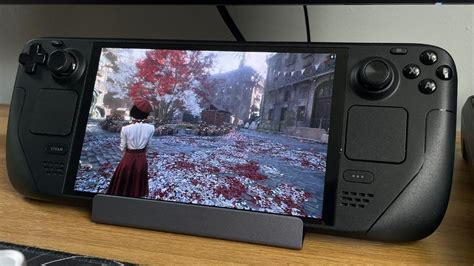
Valve designed the Steam Deck with comfort in mind, featuring an ergonomic build that feels substantial yet balanced in the hands. Its integrated controls, including dual trackpads, full-sized thumbsticks, and rear paddle buttons, provide a versatile input experience for various game genres.
Despite its larger size compared to typical handheld consoles, the weight is distributed effectively, making it comfortable for extended play sessions. The device truly feels like a premium piece of hardware crafted for dedicated gamers.
Performance and Gaming Experience: PC Power on the Go
Under the hood, the Steam Deck is powered by a custom AMD APU, delivering surprising performance for a handheld device. It capably runs a wide array of modern PC games, though often requiring adjustments to lower graphical settings for optimal frame rates.
Valve categorizes games as “Verified” or “Playable” within the Steam store, simplifying the process of finding compatible titles that run well. While it won’t match a high-end gaming desktop, the Steam Deck offers an impressive portable PC gaming experience for its form factor.
SteamOS and User Interface: Seamless Integration
The Steam Deck runs on SteamOS, a custom Linux-based operating system tailored for gaming and built around the Steam interface. This OS provides a smooth, console-like experience when navigating your game library and launching titles.
Beyond its gaming mode, SteamOS also includes a full desktop mode, allowing users to install other applications or perform typical PC tasks. This dual functionality enhances its versatility, making it more than just a dedicated gaming machine.
Battery Life and Portability: On-the-Go Limitations
Battery life on the Steam Deck varies significantly depending on the demands of the games being played. Expect anywhere from 2-8 hours on average, with graphically intensive titles draining the battery much faster.
Its portability is undeniable, fitting into most backpacks and cases for travel, yet the need for frequent charging for longer trips is a consideration. While excellent for short commutes or around the house, extended unplugged sessions remain a challenge.
Who is the Steam Deck For? Is It Worth It?
The Steam Deck is an ideal device for PC gamers who crave portability without sacrificing their game library. It’s also suitable for those looking for a versatile handheld device beyond simple mobile gaming.
With various models available, including the newer Steam Deck OLED offering significant display and battery improvements, there’s an option for different budgets and needs. Ultimately, for anyone seeking a true portable PC gaming solution, the Steam Deck offers tremendous value and an unparalleled experience.
Frequently Asked Questions (FAQ)
What is the Steam Deck?
The Steam Deck is a portable gaming computer developed by Valve Corporation, allowing users to play their Steam library games on a handheld device. It runs on SteamOS, a custom Linux-based operating system, and features integrated controls for a console-like experience.
How well does the Steam Deck run PC games?
The Steam Deck runs a wide variety of PC games surprisingly well for a handheld device, thanks to its custom AMD APU. While demanding titles may require lower graphical settings, Valve’s ‘Verified’ and ‘Playable’ categories help users find compatible games that perform optimally.
What is SteamOS?
SteamOS is Valve’s Linux-based operating system designed specifically for the Steam Deck, offering a streamlined, console-like interface for gaming. It also includes a desktop mode, providing full PC functionality for installing other software or performing general computing tasks.
What are the main differences between Steam Deck models?
Initially, Steam Deck models differed mainly in storage capacity (e.g., 64GB, 256GB, 512GB). More recently, Valve introduced the Steam Deck OLED, which features a superior OLED display, improved battery life, and faster Wi-Fi, offering a premium experience over the original LCD models.
Is the Steam Deck difficult to use for non-PC gamers?
No, the Steam Deck is designed to be very user-friendly, even for those unfamiliar with PC gaming. Its SteamOS interface is intuitive and mimics a console dashboard, making it easy to browse, launch, and manage games directly from your Steam library without complex setup.
Written by: Olivia Anderson
