
Table of Contents
EXTERIORVIBE.BIZ.ID – The world of portable PC gaming has been revolutionized by two key contenders: Valve’s Steam Deck and ASUS’s ROG Ally. Both devices offer a compelling experience, allowing players to enjoy their favorite PC games on the go.
However, they cater to slightly different user preferences and boast distinct specifications that set them apart. Understanding these differences is crucial for any gamer looking to invest in a powerful handheld device.
Performance: Power Under the Hood
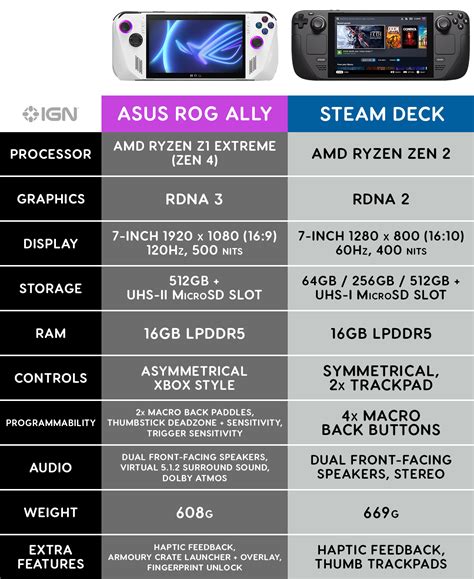
When comparing raw performance, the ASUS ROG Ally generally holds an edge, especially its Z1 Extreme variant. It features a more powerful AMD Z1 Extreme APU, delivering higher frame rates in many demanding titles.
The Steam Deck, powered by a custom AMD Aerith APU, still offers robust performance for its price point. It is optimized particularly for its SteamOS environment, ensuring a smooth experience across its validated game library.
Display and Visual Experience
The ROG Ally often boasts a superior display, featuring a 1080p resolution and a 120Hz refresh rate. This provides sharper images and smoother motion, which is particularly noticeable in fast-paced games.
In contrast, the Steam Deck offers a 720p/800p resolution screen with a 60Hz refresh rate. While not as crisp, its lower resolution is less demanding on the hardware, often contributing to better battery life and more consistent frame rates.
Operating System and User Experience
Valve’s Steam Deck runs on SteamOS, a Linux-based operating system heavily optimized for gaming and the Steam ecosystem. This provides a console-like experience with seamless integration for your Steam library.
The ROG Ally, on the other hand, runs on Windows 11, offering broader compatibility with PC games and applications outside of Steam. This flexibility comes with the typical Windows interface, which might be less streamlined for a handheld form factor.
Ergonomics and Design
Ergonomically, both devices are designed for comfortable handheld play, but they have distinct feels. The Steam Deck is known for its larger, more spread-out design, featuring dual trackpads that offer unique control options.
The ROG Ally is generally a bit lighter and more compact, making it feel more portable for some users. Its traditional joystick and button layout are familiar to most modern console gamers.
Battery Life and Portability
Battery performance varies significantly depending on the game and settings used on both devices. Generally, the Steam Deck’s lower resolution screen and SteamOS optimizations can sometimes lead to better battery life in comparable scenarios.
The ROG Ally’s more powerful hardware and higher resolution display, while providing a premium visual experience, can drain its battery faster when pushed to its limits. Both devices are portable, but the Ally’s slightly smaller footprint might appeal more to travelers.
Price and Value Proposition
The Steam Deck typically offers a more budget-friendly entry point, especially with its various storage tiers. It provides excellent value for its performance, particularly for users primarily within the Steam ecosystem.
The ASUS ROG Ally, with its advanced display and more powerful hardware, usually commands a higher price tag. It represents a premium choice for those seeking top-tier performance and Windows flexibility in a handheld device.
Choosing Your Portable Gaming Companion
The choice between the Steam Deck and ROG Ally ultimately depends on your priorities. If maximum performance, a high-resolution display, and full Windows compatibility are key, the ROG Ally might be your best bet.
However, if you prioritize affordability, a streamlined user experience within the Steam ecosystem, and unique control options, the Steam Deck remains an outstanding choice. Both devices excel at delivering compelling PC gaming in a portable package, each with its distinct strengths.
Written by: Emily Taylor
