
Table of Contents
EXTERIORVIBE.BIZ.ID – The rise of powerful handheld gaming PCs has revolutionized how enthusiasts experience their favorite titles, moving beyond traditional consoles and desktops. At the forefront of this portable revolution are Valve’s Steam Deck and ASUS’s ROG Ally, each offering a compelling vision for gaming on the go.
Understanding the key distinctions between these two giants is crucial for prospective buyers looking to invest in a device that best suits their gaming habits and budget. This comparison aims to dissect their features, performance, and overall user experience to help you make an informed decision.
Understanding the Contenders: Steam Deck and ROG Ally
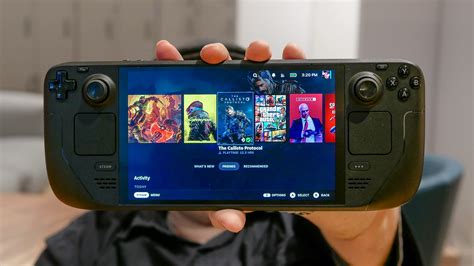
The Steam Deck, launched by Valve, entered the market as a dedicated handheld PC designed to play the extensive Steam library through its Proton compatibility layer on SteamOS. It aims to provide a seamless console-like experience with deep integration into the Steam ecosystem.
In contrast, the ASUS ROG Ally positions itself as a more versatile Windows-based gaming handheld, boasting higher raw power and the ability to run any PC game launcher or application. Its Windows operating system offers familiarity and broader software compatibility out of the box.
Performance and Hardware Comparison
When it comes to raw processing power, the ROG Ally generally has an edge, often featuring more powerful AMD Ryzen Z1 Extreme processors compared to the Steam Deck’s custom AMD APU. This translates to higher frame rates and better performance in demanding games, particularly at higher resolutions.
Display quality is another significant differentiator; the ROG Ally typically offers a higher resolution (1080p) and a faster refresh rate (up to 120Hz) screen compared to the Steam Deck’s 800p/720p 60Hz display. While both provide vibrant visuals, the Ally’s screen can deliver a sharper and smoother gaming experience for those who prioritize visual fidelity.
Operating System and Game Compatibility
The Steam Deck runs on SteamOS, a Linux-based operating system optimized for handheld gaming, leveraging Proton for Windows game compatibility. While Proton has made significant strides, some games may still encounter compatibility issues or require tweaks.
The ROG Ally, running Windows 11, offers native compatibility with virtually all PC games and launchers, including Steam, Epic Games Store, Xbox Game Pass, and more. This broad compatibility means fewer headaches regarding game availability, though managing Windows on a small screen can sometimes be less intuitive.
Ergonomics, Battery Life, and Price
Ergonomically, both devices are designed for comfortable handheld play, but their layouts and weight distribution differ, making personal preference a factor. The Steam Deck is often praised for its comfortable grip and trackpads, while the ROG Ally is lighter and more compact.
Battery life varies greatly depending on the game and settings, but in general, both devices offer comparable endurance, often ranging from 1.5 to 5 hours for demanding titles. Regarding price, the Steam Deck typically offers a more budget-friendly entry point, especially for its base models, while the ROG Ally usually sits at a higher price bracket, reflecting its boosted specifications.
Ultimately, the choice between the Steam Deck and ROG Ally depends on your priorities. If you value raw power, a higher resolution screen, and full Windows compatibility, the ROG Ally might be your pick. However, if a seamless, integrated Steam gaming experience and better value are paramount, the Steam Deck remains an excellent contender.
Frequently Asked Questions (FAQ)
What are the main differences between the Steam Deck and ROG Ally?
The Steam Deck runs on SteamOS and is deeply integrated with the Steam ecosystem, offering a more console-like experience with good value. The ROG Ally runs Windows 11, boasts higher raw performance and a superior screen, and provides broader compatibility with various PC game launchers.
Which device offers better gaming performance?
The ASUS ROG Ally generally offers better raw gaming performance due to its more powerful AMD Ryzen Z1 Extreme processors. This allows for higher frame rates and better graphical fidelity, especially in demanding titles.
Which operating system is better for a portable gaming handheld?
The ‘better’ OS depends on user needs. SteamOS on the Steam Deck is highly optimized for handheld gaming, offering a streamlined experience. Windows 11 on the ROG Ally provides universal PC game compatibility and software flexibility, but can be less optimized for a small screen and touch input.
Is the Steam Deck more affordable than the ROG Ally?
Yes, typically the Steam Deck offers a more affordable entry point, especially with its base models. The ROG Ally, with its higher specifications, usually comes at a premium price point.
Which device has a broader game library?
The ROG Ally, running Windows 11, natively supports virtually all PC game launchers and stores, including Steam, Epic Games, Xbox Game Pass, and more, giving it a broader immediate game library. The Steam Deck relies on Proton for Windows game compatibility, which, while excellent, may have some unsupported titles.
Written by: Sarah Davis
